

Visitor guides
Muay Thai rules for first-time visitors
You do not need to know the rules to enjoy a fight night, but knowing four or five things turns a blur of strikes into something you can follow.
- Weapons
- Fists, feet, knees, elbows and the clinch
- Usual format
- Five rounds of three minutes
- Between rounds
- Two-minute break
- Ways to win
- Knockout, referee stoppage, or points
Before the bell: the wai khru
Each fighter enters wearing a mongkol, a braided headband given by their gym, and performs the wai khru ram muay: a slow sequence honouring their teacher and sealing the ring. The mongkol is removed by the trainer just before the fight starts.
It is a ritual, not a performance for the crowd. Watch it rather than talk through it; many fighters use it to settle their breathing before the first round.
What actually scores
Judges reward clean, effective strikes that visibly affect the opponent, and control of the fight: pushing forward, landing kicks that move someone, winning the clinch. A kick blocked by a shin does not score, and neither does a flurry that looks busy but lands lightly.
Knees and elbows are legal and often decide a close round. So is work in the clinch, where fighters wrestle for position on the neck and body — it looks like a pause to a newcomer, but it is where a lot of the scoring happens.
- Punches, kicks, knees, elbows and clinch work are all legal
- Strikes score when they land clean and have an effect
- Blocked kicks and light flurries do not score
- A fighter forcing the pace is usually winning the round
How rounds usually run
The opening round is often a reading round: both fighters range-find, and little appears to happen. From the middle rounds the pace rises, and the last round is where a fight that is close on the cards is decided.
The band matches this. When the music quickens, the fighters have been told the round is close — it is the clearest signal in the building, and you do not need Thai to hear it.
How a bout ends
By knockout, by the referee stopping it to protect a fighter, by a corner throwing in the towel, or by decision on the judges' scorecards when the final bell goes.
The referee is not there to be a spectator's obstacle: stoppages in Muay Thai are often early by other combat-sport standards, and that is deliberate.
Watching, without doing it wrong
Cheer, react, applaud a good exchange. Thai crowds are loud and it is expected. Keep the noise for the fight rather than the wai khru, and do not climb on seats or reach over the ropes.
The card for the night is announced in the stadium. If you want to know how many rounds a particular bout is scheduled for, the announcer says so before it starts — the length can differ from one bout to another.
Questions people ask
How many rounds does a Muay Thai fight last?
Professional bouts are usually five rounds of three minutes with two-minute breaks, though shorter formats exist. The announcer states the format for each bout on the night.
Are elbows allowed?
Yes. Elbows and knees are part of the sport, which is why it is called the art of eight limbs, and an elbow can end a fight quickly by cutting an opponent.
Why does the music change during the fight?
The live band follows the action: the tempo rises as the round gets more urgent. It is part of the sport rather than a soundtrack added for visitors.
Keep reading
All guides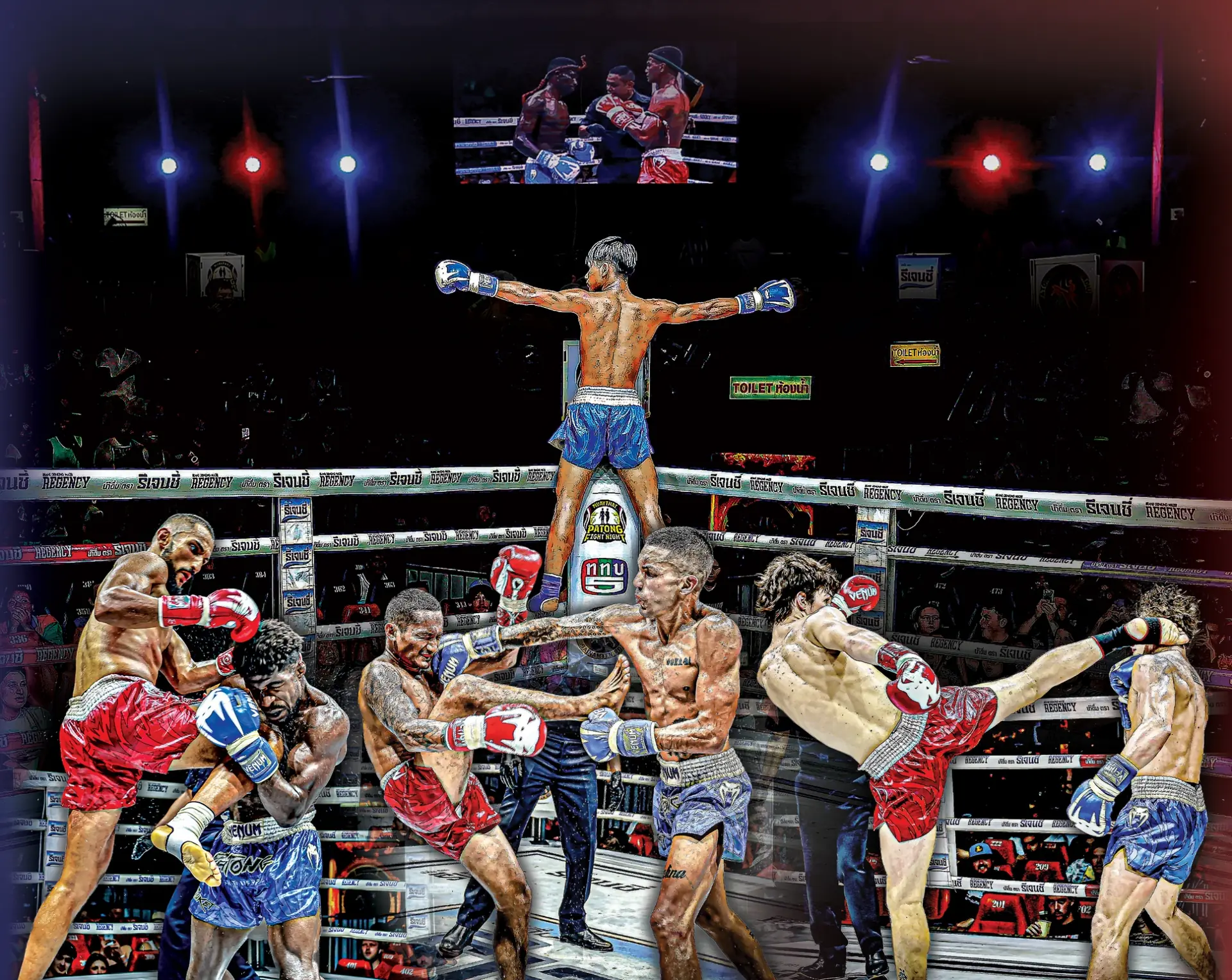
Muay Thai in Phuket: a visitor's guide
Watching Muay Thai in Phuket: which nights have fights, what tickets cost, what happens before the first bell, and how to plan the evening around it.

The best Muay Thai stadium in Patong: how to choose
How to choose a Muay Thai stadium in Patong: what a real fight night looks like, what a ticket at Patong Boxing Stadium costs, and what to check before you pay.

RINGSIDE or STADIUM: which ticket to choose
RINGSIDE seats or the STADIUM ticket at Patong Boxing Stadium: what each one gives you, who each one suits, and how seats are assigned.


Ready to pick a night?
Choose your fight night and pay online. Your voucher is emailed straight away.